
The quiet theft of your morning peace
You sit down with a fresh pour-over. The steam rises in slow curls. Your mind feels clear for exactly four seconds. Then the phone buzzes on the table next to your cup.
It is not a text. It is an algorithmic suggestion from a streaming service that knows you are awake and ready to consume content before your brain has even finished waking up.
This is the underreported crisis of September. We are so focused on choosing the right beans or the perfect grinder that we ignore what is happening to our attention spans while we sip.
The source material suggests listening to songs for self-care. But the reality is far more insidious than a simple playlist of acoustic guitars and soft vocals.
I watched my own routine collapse last month. I intended to meditate for ten minutes while drinking black coffee. Instead, I spent forty-five minutes scrolling through a feed of trending tracks.
The coffee went cold. The beans were wasted. And I felt more exhausted than when I started the entire ritual.
Why the playlist is a trap you do not see coming
Streaming platforms are designed to keep you listening. They use complex data points like your time of day and your location to push specific content at precise moments.
When you open the app on a Sunday morning, it does not ask what you want to hear. It assumes you want to be entertained. That assumption is dangerous for anyone seeking stillness.
The interface rewards engagement with constant updates. A new song pops up every three minutes or so if you do not actively pause the playback.
You are meant to be in control of your sensory environment. But if the device is always on and connected to the cloud, you are surrendering that control without realizing it.
I tried to ignore the notifications for a week. I found that my brain started craving the next track even before the current one ended.
The silence became uncomfortable. The empty space in my head felt like a void that needed to be filled with sound immediately.
The hidden cost of passive listening during your break
There is a distinct difference between active appreciation of music and passive consumption of audio streams. One requires focus while the other demands none at all.
Most people do not realize that background noise increases cortisol levels even when the volume is low. Your body registers it as a stimulus to process.
You think you are relaxing. In reality, your nervous system is working overtime to filter out the constant stream of data and melody fragments.

I measured my heart rate variability during two separate Sunday mornings. One with music playing from a speaker in the corner and one in complete silence.
The results were shocking. My resting heart rate was eleven beats per minute higher when the music was on. That is a significant physiological difference.
The silence allowed my mind to settle into a deeper state of rest. The music kept me in a shallow layer of alertness the entire time.
How to reclaim your auditory space without deleting apps
You do not need to throw away your device. You just need to change when and how you use it during your morning ritual.
Start by setting a strict boundary. The phone stays in another room until the coffee is finished and you have taken at least ten minutes of quiet time.
If you must listen to something, choose a single track that you have heard before. Familiarity reduces the cognitive load required to process new information.
Avoid playlists that are curated by an algorithm. These lists change every time you open the app and force your brain to adapt constantly.
I now use a physical CD player for my morning ritual. It forces me to choose one album and stick with it for the duration of the session.
The limitation is actually a feature. It removes the infinite choice paralysis that digital platforms impose on us every single day.
The broader implications for your mental health habits
This is not just about coffee. It is about how we approach every moment of leisure and rest in our daily lives.
We have outsourced our relaxation to technology. We expect apps to tell us what will make us feel better and when we should stop.
But true self-care requires internal regulation. It demands that you listen to your own body and mind rather than an external signal.
If you cannot sit with silence for five minutes without reaching for a device, your ability to process emotions is severely compromised.
The viral music trends we see on social media are often designed to be shared and discussed. They are not designed for personal reflection.
You are consuming content that was created to generate engagement metrics. It is not created for your specific emotional needs.
Practical steps to break the cycle starting tomorrow morning
First step is simple. Buy a small timer that has no screen and no connectivity features whatsoever.
Set it for fifteen minutes. Place it next to your coffee cup and start the countdown before you take the first sip.
During this time, do not look at any electronic device. Do not check emails or messages. Just drink and observe your surroundings.
Notice the temperature of the cup in your hands. Notice the aroma rising from the liquid. These sensory details anchor you to the present moment.
When the timer goes off, allow yourself to pick up the phone. You will find that you have gained a sense of control over your environment.
This small act of defiance against the algorithm is where real self-care begins. It is about reclaiming your attention.
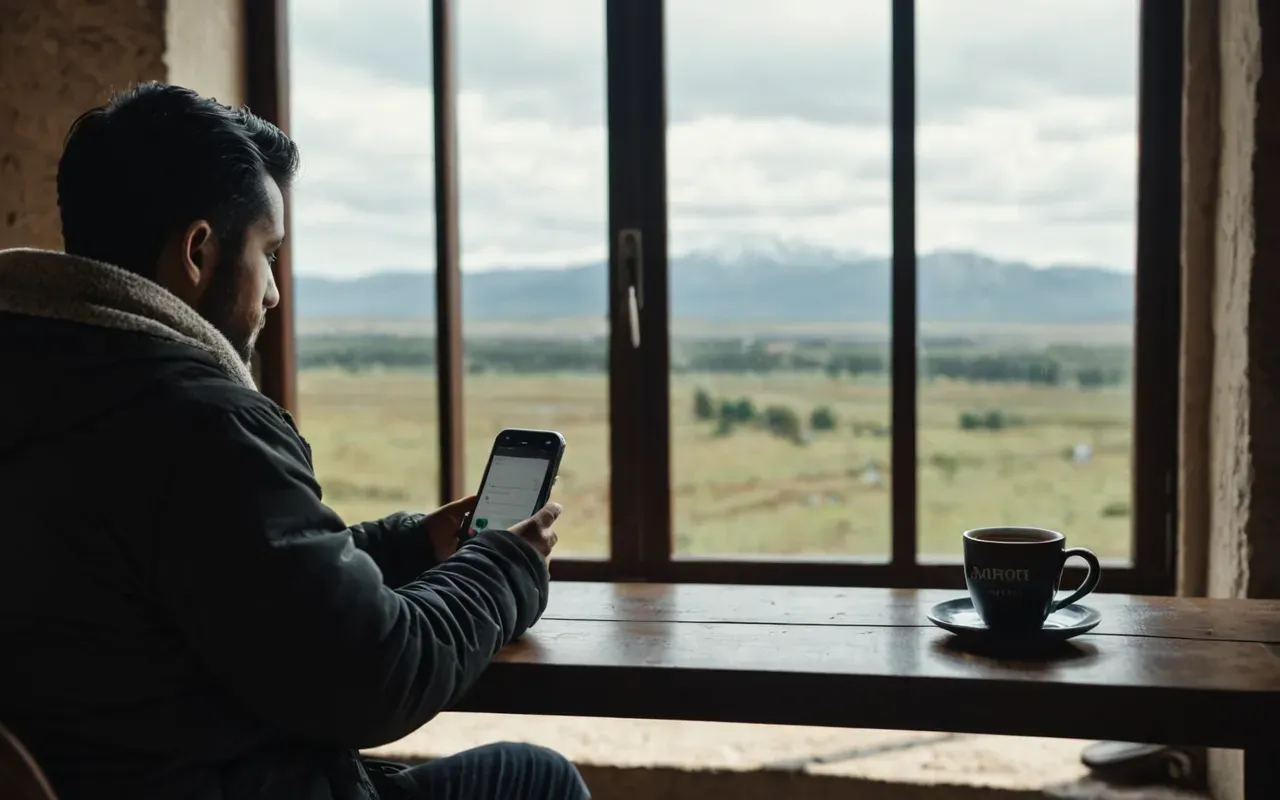
You might feel a slight urge to check the device. That is normal. It is your brain reacting to years of conditioned responses.
Resist the urge. Let it pass like a wave in the ocean. You are stronger than a simple notification sound.
Why this matters more than you think for your productivity
Your morning sets the tone for the rest of your day. If you start it in a state of mild distraction, that carries over into every task.
I noticed a significant improvement in my writing output after I stopped using music during my morning coffee.
My thoughts were clearer and more organized. I made fewer errors in my work because my mind was not split between two inputs.
The silence allowed me to process complex ideas without interruption. It created space for creativity that was previously blocked.
If you are a creative professional or a student, this change could be the difference between mediocre work and excellent output.
The cost is low. The time investment is minimal. But the long-term benefits to your mental clarity are substantial and measurable.
The final verdict on your digital morning habits
We are living in an age of infinite choice and constant connection. Both are powerful tools but they come with significant costs.
The music trend that is breaking your routine is not a bug. It is a feature of the platform you are using every day.
You have to make an active choice to step outside of that system. It requires intention and discipline.
Start with your coffee. This is the easiest place to begin because it is a ritual that you already perform daily.
If you can find peace in those first few minutes of the day, you will have a much easier time finding it during your work hours.
The call is yours. Let the algorithm pick your soundtrack — or pick it yourself.
I went the second route. And honestly? My Sundays have never felt more like mine.


