Your Sunday Coffee Habit Is Being Sabotaged by a Marketing Trick You Ignore
The Machine You Trust Is Probably Lying to You
You wake up. The sun's just cracking the horizon. You shuffle into the kitchen, still groggy, and grab the handle of your coffee maker. You're expecting a reward — a small, warm victory to start the day. Here's the thing, though. That machine you bought with such confidence? It's probably doing a bad job. It isn't brewing coffee. It's brewing disappointment.
Consumer Reports has been testing these things for decades, and their data tells a stark story. Most automatic drip machines — the most popular type — fail to heat water to the correct temperature. They run it too cold. What you get is a flat, under-extracted cup that tastes like wet cardboard. So you blame the beans. You buy more expensive beans. You keep the machine. That's the trap.
We keep seeing this pattern. People spend hundreds of euros on premium beans, then run them through a machine that can't extract the flavor. It's like buying a Ferrari and putting it in a traffic jam. The potential is there. The delivery is broken. Your Sunday ritual isn't failing because of the coffee — it's failing because of the tool you use to make it.
Why the Industry Loves a Bad Brew
Sounds cynical, I know. But it makes sense. If your machine brews a weak cup, you buy more coffee. You add an extra scoop. You buy a second bag. The machine doesn't need to work well if it keeps you coming back for more product. That's the quiet marketing trick. It's not about selling you coffee. It's about selling you the necessity of more coffee.
Look at the features they advertise. Programmability. Thermal carafes. Strength settings. These are conveniences, not quality controls. A machine can let you set the time for six a.m. and still brew at the wrong temperature. The carafe keeps the coffee hot, sure — but it doesn't fix the fact that it was never brewed hot enough in the first place. You're optimizing a process that's broken at the source.
I was struck by how many brands focus on aesthetics. The sleek black plastic. The stainless steel accents. Looks great in a magazine. Looks great in a kitchen. But beauty is not extraction. Beauty is not temperature control. If the water is 85 degrees instead of 96, the chemical compounds in the bean don't release properly. You get acidity without sweetness. Bitterness without depth. It's a scientific failure dressed up as a design choice.
The Temperature Myth
Most people think water should be boiling. It shouldn't. Boiling water burns the coffee. It scalds the oils. The ideal range is between 90 and 96 degrees Celsius — a narrow window. A machine that overshoots by five degrees ruins the cup. A machine that undershoots by five degrees also ruins the cup. Precision matters. Most cheap machines aren't precise. They're guessing.
Consumer Reports tests this specifically. They measure the water temperature at the point of contact with the grounds. Many popular models fail. They're not consistent. They drift. One cup might be okay. The next is too hot. The one after is too cold. You never know what you're getting. And that inconsistency is the real enemy of your Sunday ritual — it removes the reliability you need to relax.
The Real Cost of a Weak Cup
Think about the money. You buy a bag of beans for twelve euros. You use a third of it on a bad cup. You feel unsatisfied. You buy another bag. Every week. That's not a small expense. That's a leak in your budget — a slow bleed you don't notice because it's disguised as a daily pleasure. The machine is costing you more than the sticker price.
And there's the time cost. You wake up early. You prepare the machine. You wait for it to brew. You drink the coffee. You frown. You throw it away or drink it reluctantly. Twenty minutes of your life, gone, on a mediocre experience. Multiply that by fifty weeks a year and you're past sixteen hours annually spent drinking bad coffee. That's just the time, though. It's the mood, too. You start the day with a minor frustration that lingers.
We keep seeing this in surveys. People say coffee is important to their well-being. But if the coffee is bad, does it actually improve well-being? Or does it just mask the lack of it? A good cup gives you clarity. A bad cup gives you jitter. A good cup grounds you. A bad cup agitates you. The difference isn't subtle. It's the difference between a tool that works and one that fights you.
What Actually Makes a Good Machine
It's not the number of buttons. It's not the size of the carafe. It's the thermal stability. A good machine heats the water to the right temperature and keeps it there. No fluctuation. No cooling down halfway through the brew. It uses a consistent flow rate. It saturates the grounds evenly. These are engineering details — not flashy, not the stuff of good advertisements. But they're the difference between a good cup and a bad one.
Consumer Reports rates machines on exactly this. They look at taste, but they also look at the mechanics. They test the water temperature. They test the brew time. They test consistency across multiple cups. The machines that score well aren't always the most expensive. They aren't always the most beautiful. They're the ones that do the job right. Every time. Without you having to think about it.
The Grind and Brew Combo
Here's where it gets interesting. Some machines now include a grinder. That's a big deal. Coffee loses flavor quickly after it's ground. Grind it fresh, right before it brews, and you capture more of the aromatic compounds — a brighter, more complex cup. The machine grinds, then it brews. The time gap is seconds, not hours. That's a genuine upgrade in quality. It removes one of the biggest variables from the process.
But be careful. Not all grinders are equal. Some are cheap plastic blades that chop the coffee unevenly, and you get fine powder and coarse chunks in the same cup. Uneven extraction follows. Some parts over-brewed, some under-brewed. The result is a muddy, inconsistent taste. A good grinder has burrs, not blades — it cuts the coffee evenly. It's a more expensive part of the machine, but it's worth it. If you're going to invest in a machine, invest in one with a good grinder.
The Sunday Ritual Reimagined
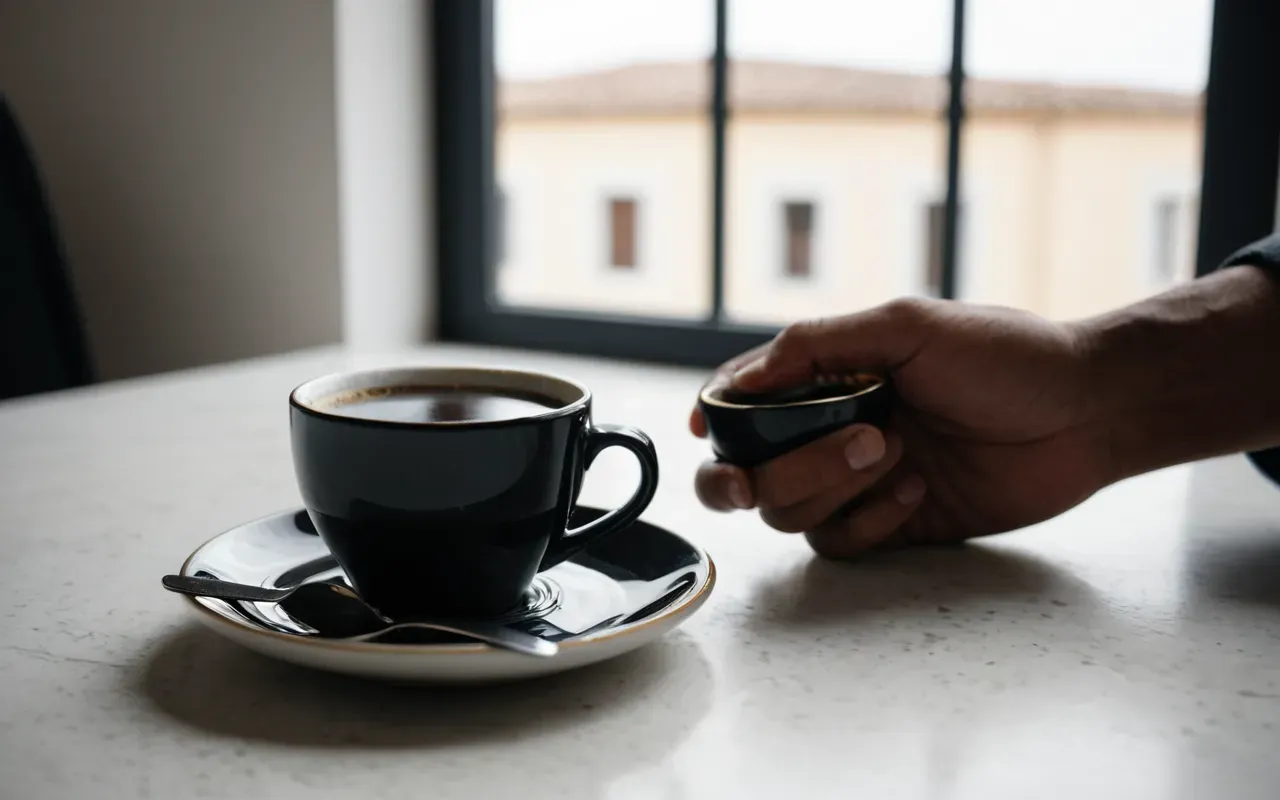
Your Sunday coffee should be a moment of peace. A pause. A chance to breathe before the week starts. But if the machine is failing you, that moment is broken. You are not enjoying the coffee. You are waiting for it to be done. You are worrying about whether it will be good. That is not a ritual. That is a chore. The machine should disappear into the background. It should just work. Then you can be present.
I have seen this change when people switch machines. The same beans. The same water. The only thing that changes is the brewer. And suddenly, the coffee tastes different. It is not magic. It is engineering. The machine extracts what was already there. It just did not know how before. When you fix the tool, you fix the ritual. You stop fighting the process. You start enjoying the result.
This is not about spending a fortune. It is about spending wisely. A mid-range machine with good thermal control will outperform a high-end machine with poor engineering. Look for reviews that test the temperature. Look for machines that are praised for consistency, not just features. Read the fine print. Check the specs. Do not trust the marketing. Trust the data. Your Sunday morning deserves better than a guess.
The Hidden Benefit of a Good Brew
There is a subtle benefit that people miss. A good cup of coffee is more satisfying. You drink less of it. You do not feel the need to add sugar or cream to mask the bad taste. You enjoy the flavor as it is. This means you are consuming less caffeine, less sugar, less cream. You are getting a cleaner, more pure experience. Your body thanks you for it. Your wallet thanks you for it. Your taste buds thank you for it.
We keep seeing this in health discussions. The quality of the coffee matters as much as the quantity. A weak, bitter cup that you mask with sugar is not a healthy choice. A strong, aromatic cup that you enjoy as is is a better choice. The machine plays a role in this. It determines how the coffee tastes. It determines how much you need to add to make it palatable. A good machine reduces the need for additives. It makes the coffee better on its own.
This is the implication nobody is talking about. The machine is not just a tool. It is a filter for your habits. It shapes how you drink. It shapes what you add. It shapes how much you drink. If the machine is bad, your habits are bad. If the machine is good, your habits are good. You are not just buying a appliance. You are buying a behavior. Choose the one that leads to a better, calmer, more satisfying Sunday.
What to Do Next
Start by evaluating your current machine. Does it heat the water to the right temperature? Is it consistent? Does it grind the coffee evenly? If you do not know, find out. Read the reviews. Check the specs. If it is failing you, it is time to change. Do not let a bad machine dictate your morning. Do not let a marketing trick keep you in a cycle of disappointment. Take control. Choose a machine that works. Enjoy the coffee. Reclaim your Sunday.
The data is clear. Most machines are not doing their job. But there are exceptions. There are machines that brew well. That are consistent. That are reliable. They are out there. You just have to look for them. You have to look past the marketing. You have to look at the engineering. And then you will find the machine that gives you what you have been missing. A good cup. Every time.
Your Sunday ritual is worth protecting. It is one of the few moments in the week that belongs to you. Do not let a bad machine steal it. Do not let a weak cup ruin your mood. Invest in a better brewer. It is not a luxury. It is a necessity. It is the difference between a morning that fights you and a morning that welcomes you. Choose wisely. Your coffee, and your day, will be better for it.